How to Become a Hairdresser in the UK
4/30/20264 min read
You need a recognised qualification, hands-on training, and a clear idea of where you want to take it. The industry is open to career changers, complete beginners, and people who have been thinking about it for years. What moves you from thinking to working is getting the right training in place.
Starting Out
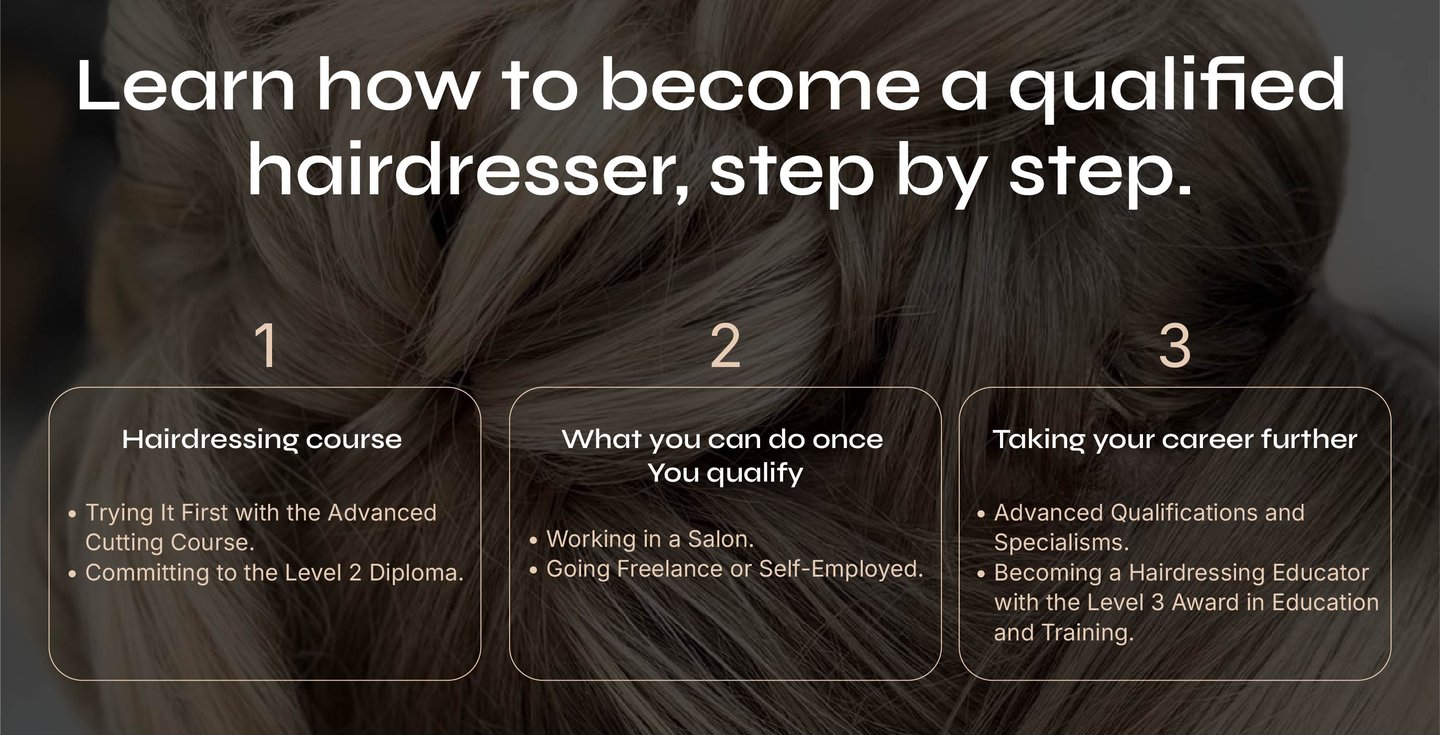
Trying It First with the Advanced Cutting Course
Not everyone is ready to walk straight into a 28-week diploma. That is completely fine. The Advanced Cutting Training Course at House of GB gives you three days of real, practical training before you make that bigger commitment. Groups are capped at four students. You work on live models, and the course covers both theory and hands-on cutting techniques, with an instructor alongside you throughout.
No experience is needed. You finish with a CPD-accredited certificate from the Centre of Excellence, plus ongoing support after the course ends. It is not a full hairdressing qualification, but it gives you something solid: actual time behind the chair, real confidence with scissors, and a much clearer picture of whether this is the direction you want to go.
Committing to the Level 2 Diploma
This is the qualification. Most salons in the UK will not take on a stylist without at least a Level 2 qualification, and your diploma is what allows you to get insured to work with clients independently. At House of GB it runs two 8-hour days a week over 28 weeks, inside a professional luxury salon, with instructors who have real industry experience.
The course covers cutting and styling, colouring and lightening, shampooing and conditioning, blow-drying, setting and dressing, and client consultation. Everything a client expects when they sit in a salon chair. There are no entry requirements beyond being 15 or over. 0% finance is available, and you finish with a CPD-accredited Level 2 Diploma in Women's Hairdressing that is recognised across the industry. That piece of paper is what opens the door.
What You Can Do Once You Qualify
Working in a Salon
Salon work is where most newly qualified hairdressers start, and for good reason. You are cutting, colouring, and consulting on different hair every single day. Different textures, different requests, and different problems to solve. That variety builds speed and confidence faster than almost any other environment. Your Level 2 Diploma from House of GB meets the standard most employers are looking for, so you go in as a qualified stylist rather than starting at the very bottom.
Going Freelance or Self-Employed
Some people qualify and go straight to working for themselves. Mobile hairdressing, chair rental, home salons. The options are real and accessible once you hold a recognised qualification and the insurance that comes with it. Freelance takes longer to build into a full income, but the earning ceiling is higher and the flexibility suits a lot of people far better than fixed salon hours ever would. Many hairdressers spend a few years in employment first, build a loyal client base, then make the move. Others go independent from day one. Both work. What makes it possible either way is the qualification behind you.
Taking Your Career Further
Advanced Qualifications and Specialisms
The Level 2 Diploma is a starting point, not a ceiling. From there you can move into Level 2 NVQ qualifications covering barbering, chemically treated hair, or African type hair, or push straight into Level 3 NVQ in Hairdressing. Specialising moves you away from general work and towards in-demand services. Colour specialists, precision cutters, and textured hair experts. These are the stylists with waiting lists.
Becoming a Hairdressing Educator with the Level 3 Award in Education and Training
Teaching is a path a lot of qualified hairdressers overlook until they are well into their careers. It is worth thinking about sooner. The Level 3 Award in Education and Training at House of GB is an Ofqual regulated Focus Awards qualification. It qualifies you to teach any subject you already hold a qualification in. For a qualified hairdresser, this means you can teach hairdressing professionally and get paid to do it.
Twelve weeks, Monday mornings, 9am to 1pm. Online delivery is available over six months if the classroom format does not suit your schedule. Groups stay at eight students maximum, no prior teaching experience is required, and Klarna plus monthly payment options are available. It is a practical route into a completely different dimension of the same career, one that brings stability, variety, and the chance to shape the next generation of stylists coming through.
Frequently Asked Questions
Do you need qualifications to become a hairdresser in the UK?
There is no legal requirement, but in practice most salons will not hire you without at least a Level 2 qualification. You also need a recognised qualification to get insured, which becomes essential the moment you start working with clients.
How long does it take to become a qualified hairdresser?
With the Level 2 Diploma at House of GB the programme runs 28 weeks at two days a week. Around seven months from starting to holding a qualification that the industry recognises.
Can I become a hairdresser with no experience?
Yes. The Level 2 Diploma has no specific entry requirements beyond being 15 or over. If you want to test the water first, the Advanced Cutting Course is three days, no experience needed, and gives you a real feel for hands-on training before you commit to anything longer.
What is the difference between CPD accreditation and a regulated qualification?
CPD accreditation confirms a course meets a recognised training standard. A regulated qualification like the Level 2 Diploma sits on the Ofqual register and carries formal recognition across the industry. Both matter, but for working professionally as a hairdresser, the regulated qualification is what you need.
Can I teach hairdressing after qualifying?
Yes. The Level 3 Award in Education and Training at House of GB qualifies you to teach any subject you already hold a qualification in. Twelve weeks, no prior teaching experience required.